

Serving Citizens: The Transformative Effect of Automating the New Expungement System in New Jersey


Having a criminal record can have a profoundly negative impact on a person’s life. Even being charged—not convicted—for a minor offense can reduce a person’s quality of life. When a person is arrested or convicted of a crime, a record is created and maintained in various law enforcement databases. This criminal record can have significant consequences for the individual, including limiting job opportunities, housing options, and educational opportunities. In some states, a person can have difficulties getting a driver’s license and may even lose their right to vote. Bluntly put, a criminal record can be a life sentence to poverty, and as a result, bipartisan support for criminal justice reform and expungement has gathered significant momentum in several states, especially in New Jersey.
Millions of records are now eligible for expungement in the state of New Jersey, but these records are not located in a single system. Whenever the state receives a request for expungement, it must locate the record(s) first across multiple state, county, and municipal databases to check the eligibility of the petition. This process is very inefficient and time-consuming. The complexity of managing and processing expungement petitions is not unique to New Jersey, as many states struggle with the same issue. With the help of InfoShare® technology, the government has made significant improvements in making the process more efficient so that citizens can receive the benefits of criminal justice reform.
After reviewing CSI’s proposal, the NJOAG, NJSP, and NJAOC agreed to work together to create a new expungement system. CSI was entrusted with this large-scale project because of our track record and domain knowledge. On top of that, because of the trust we’ve built over the years with legacy clients, CSI can facilitate cooperation among them and leverage those relationships to bring additional expertise to the project. For example, reaching out to prosecuting attorneys, who know the expungement laws inside and out, in the NJOAG and Prosecutor’s Offices across the state helped us better understand the laws and determine how the workflows have to work. Joshua Ottenberg, Director of the County/State Agency Division at CSI, observes that “There's been tremendous cooperation at all levels of government to do this, and it's been inspiring to see different agencies work together in a way that we've never really seen them work before to get the job done.”
From a technology point of view, Norcross adds, “Not only do we have the software and the InfoShare® Engine powering everything, but we also have an extremely talented group of engineers who are experts at building interfaces with third parties. We mine data out of these other systems, and we’re able to transfer that data to other agencies in a readable format, and then send them the signals back to expunge the records. If they had gone with any other vendor, it likely would have been a fragmented solution with multiple points of entry in different systems.”
The most impressive feat in the New Jersey Expungement Project has been integrating the multiple systems of the NJOAG, NJSP, NJAOC, and Prosecutor’s Offices to create a single, unified system that closely follows the written statute. To help accomplish this, our team undertook the crucial task of building a number of automatic interfaces with trusted NJSP vendors and performing data integration to organize all incoming and outgoing data in a compatible format. CSI has the benefit of years of expertise in providing an adaptable and scalable total solution platform with expert interfacing to facilitate interoperability among data contributors. With our interfaces, these agencies can access multiple systems from a single point of entry and benefit from not having to re-enter existing data while simultaneously eliminating duplicate entries. Our systematic approach towards converting and cleansing data maintains the data integrity, with legacy data appearing as if it was entered natively into the new InfoShare® system.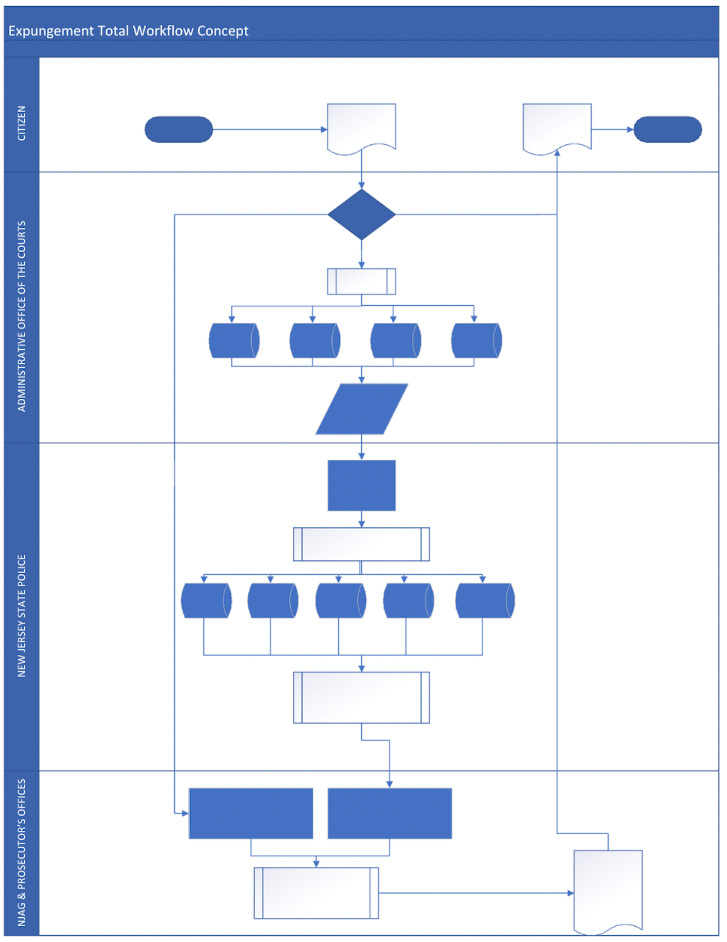
Expungement in New Jersey
In recent years, the New Jersey legislature has enacted new expungement laws, representing a significant step forward in giving individuals with criminal records a chance to start anew. For example, the Marijuana Decriminalization Law expunges the records of individuals who were once stigmatized for possessing or selling cannabis. In addition, the Clean Slate and expedited expungement programs take a proactive approach to expungement, where over a set period of time or after completing certain requirements, the state will automatically expunge selected charges from an individual’s criminal history of arrests and convictions.Millions of records are now eligible for expungement in the state of New Jersey, but these records are not located in a single system. Whenever the state receives a request for expungement, it must locate the record(s) first across multiple state, county, and municipal databases to check the eligibility of the petition. This process is very inefficient and time-consuming. The complexity of managing and processing expungement petitions is not unique to New Jersey, as many states struggle with the same issue. With the help of InfoShare® technology, the government has made significant improvements in making the process more efficient so that citizens can receive the benefits of criminal justice reform.
Accomplishing a Herculean Feat
CSI proactively approached the New Jersey Office of the Attorney General (NJOAG), the New Jersey State Police (NJSP), and the New Jersey Administrative Office of the Courts (NJAOC) with a solution that would streamline the entire expungement process. “CSI had prior relationships that put us in a unique position with the most significant parties in the expungement workflow. We had existing interfaces and handled many of the systems for the NJSP, the NJAOC, the County Prosecutor's Offices, and the NJOAG,” recounts Richard Norcross, Executive Vice President at CSI. “But building a system that effectively connects all these agencies together is an enormous undertaking.”After reviewing CSI’s proposal, the NJOAG, NJSP, and NJAOC agreed to work together to create a new expungement system. CSI was entrusted with this large-scale project because of our track record and domain knowledge. On top of that, because of the trust we’ve built over the years with legacy clients, CSI can facilitate cooperation among them and leverage those relationships to bring additional expertise to the project. For example, reaching out to prosecuting attorneys, who know the expungement laws inside and out, in the NJOAG and Prosecutor’s Offices across the state helped us better understand the laws and determine how the workflows have to work. Joshua Ottenberg, Director of the County/State Agency Division at CSI, observes that “There's been tremendous cooperation at all levels of government to do this, and it's been inspiring to see different agencies work together in a way that we've never really seen them work before to get the job done.”
From a technology point of view, Norcross adds, “Not only do we have the software and the InfoShare® Engine powering everything, but we also have an extremely talented group of engineers who are experts at building interfaces with third parties. We mine data out of these other systems, and we’re able to transfer that data to other agencies in a readable format, and then send them the signals back to expunge the records. If they had gone with any other vendor, it likely would have been a fragmented solution with multiple points of entry in different systems.”
Harnessing the Power of Automation
Prior to the new expungement system, NJSP staff had to go through a painstaking workflow where they had to log into a website, manually review and download the information, enter the data into their internal system, conduct separate searches across multiple systems, and manually prepare position papers. Until it was done digitally, the lack of system integration meant that information was siloed and not shared at all between systems. With New Jersey’s focus on criminal justice reform, the NJOAG, NJSP, NJAOC, and Prosecutor’s Offices needed a new system that will control and ease the increasing workload.The most impressive feat in the New Jersey Expungement Project has been integrating the multiple systems of the NJOAG, NJSP, NJAOC, and Prosecutor’s Offices to create a single, unified system that closely follows the written statute. To help accomplish this, our team undertook the crucial task of building a number of automatic interfaces with trusted NJSP vendors and performing data integration to organize all incoming and outgoing data in a compatible format. CSI has the benefit of years of expertise in providing an adaptable and scalable total solution platform with expert interfacing to facilitate interoperability among data contributors. With our interfaces, these agencies can access multiple systems from a single point of entry and benefit from not having to re-enter existing data while simultaneously eliminating duplicate entries. Our systematic approach towards converting and cleansing data maintains the data integrity, with legacy data appearing as if it was entered natively into the new InfoShare® system.
Expungement Workflow Diagram
Automation process:
- Citizens submit online petitions themselves, which get passed through court systems to find cases or legal reasons that would otherwise prevent expungement.
- The petition is sent to NJSP to conduct additional checks by querying various systems.
- If the petition passes, NJSP electronically sends it to the NJOAG and Prosecutor’s Offices.
- Judges authorize the final expungement order and send the decision to the New Jersey eCourt system.
- The final decision returns to the NJSP, NJOAG, and Prosecutor’s Offices to expunge the information in all relevant New Jersey databases.
 Success Stories
 Success Stories
 News
 News